NASA and JPL have closed the books on the Mars Opportunity rover. Designed for a 90 day mission, the little explorer-that-could made it almost 15 years. The last transmission from the rover has been translated into something a bit anthropomorphic and pensive, and variations on the above image have become Internet memes. Someday someone will find it sitting forlornly in a pile of Martian dust, and at that point we’ll have to decide whether to bring it back to be displayed in the Smithsonian, or to create a permanent historical park on Mars.
Good job, Opportunity (you, too, Spirit and Sojourner). Rest easy, we’ll find you someday.
Our latest Mars probe landed successfully today, after a 7 month journey from it’s launch site at Vandenberg Air Force Base. Designed to study the physical structure of Mars, the probe will look for water, and use super-sensitive seismometers to study the planet’s interior. It will drill down into the ground beneath the lander to help scientists explore the mantle and core of Mars.
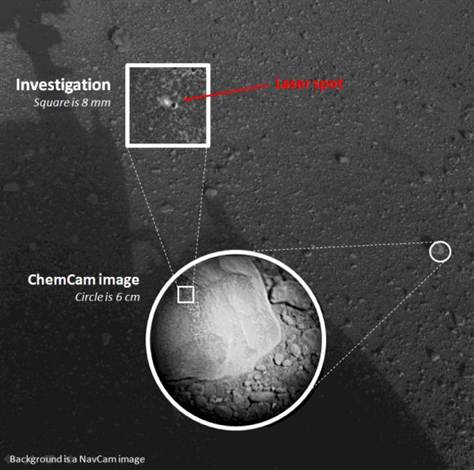
The official story is one of a modest laser device, used to blast tiny holes in rocks, and analyze the resulting dust and debris with a spectrometer. This, according to the briefs, will allow scientists to determine the chemical structure of the rocks. NASA/JPL just released a picture of their first test firing.
From the looks of the images, you’d think “no big deal. A little tiny hole in a rock.” The truth, however, is much more sinister.
We all know the government never tells you the complete story about these things. Remember when spy satellites were all the “top-secret” rage, and they “could read the license plate number on your car”? Of course, the capabilities were far more than was admitted. The same thing applies to Curiosity.
A nuclear reactor? To power a golf cart and a laser pointer? Not bloody likely…
This is the best video I’ve seen so far explaining how Curiosity was designed to land. I’m just amazed that it worked. Twelve year old Space Cadet Jimmiejoe was bouncing up and down, telling me it was going to work no sweat, but I really didn’t believe him. I worried that the parachute would fail, or the heat shield would get hung up, or the retro-rockets wouldn’t fire correctly… and I really sweated the whole sky-crane thing. That was just crazy writ large! Hover 60 feet in the air, and drop this huge thing down on a tether? Are they nuts?? Then the tethers had to be cut, allowing the rocket frame to fly away. If that hadn’t worked, it would have dropped on top of the lander once it’s fuel ran out.
BUT IT WORKED!
Congratulations to NASA and JPL!
You know what would be cool? I know it can’t happen, but wouldn’t it be something if Curiosity could, at the end of it’s science programs, drive to one of the other lander’s locations, just to visit? Too far, over terrain that would probably be impossible, and the mechanisms of the machine would likely never survive, but that would be something to see.
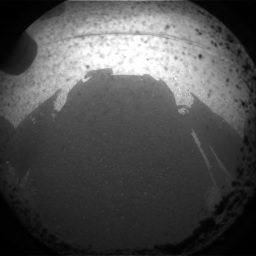
Here’s what it might look like if you were there right now. Curiosity is safely on the surface of Mars! After a 7 minute landing program that took the lander from 13,000 MPH to a soft landing, the first pictures have been downloaded. Science starts soon!
Photo: Mars Curiosity/NASA
The parachute popped exactly right. The retro-rockets fired perfectly, bringing it to a hover over the ground, then dropped it to the ground on a sky crane system that has never before been attempted. Now the rover begins at least two years of science work.
Space Cadet Jimmiejoe is jumping up and down like crazy. I’m glad to see he’s still around.
The moon at the top is Rhea, which is about 1500 km (950 miles) across. We’re looking past its south pole here. The moon farther away is Dione, which is 1100 km (700 miles) in size. And since Cassini was very nearly in the plane of Saturn’s equator, the rings are nearly edge-on. Note that Dione is on the other side of the rings as seen by Cassini, so the bottom of the moon is obscured by the rings. We can’t see Saturn itself, but it’s off to the left in this shot.
Rhea is only a little bigger than Dione, but is a lot closer in this shot: 61,000 km versus 924,000 for Dione! That’s why Dione looks so much smaller. As seen by Cassini in this shot, it’s actually more than twice as far as our Moon is from the Earth. Both moons are composed of mostly water ice, with some rock. Both have been heavily battered by impacts, as you can see.
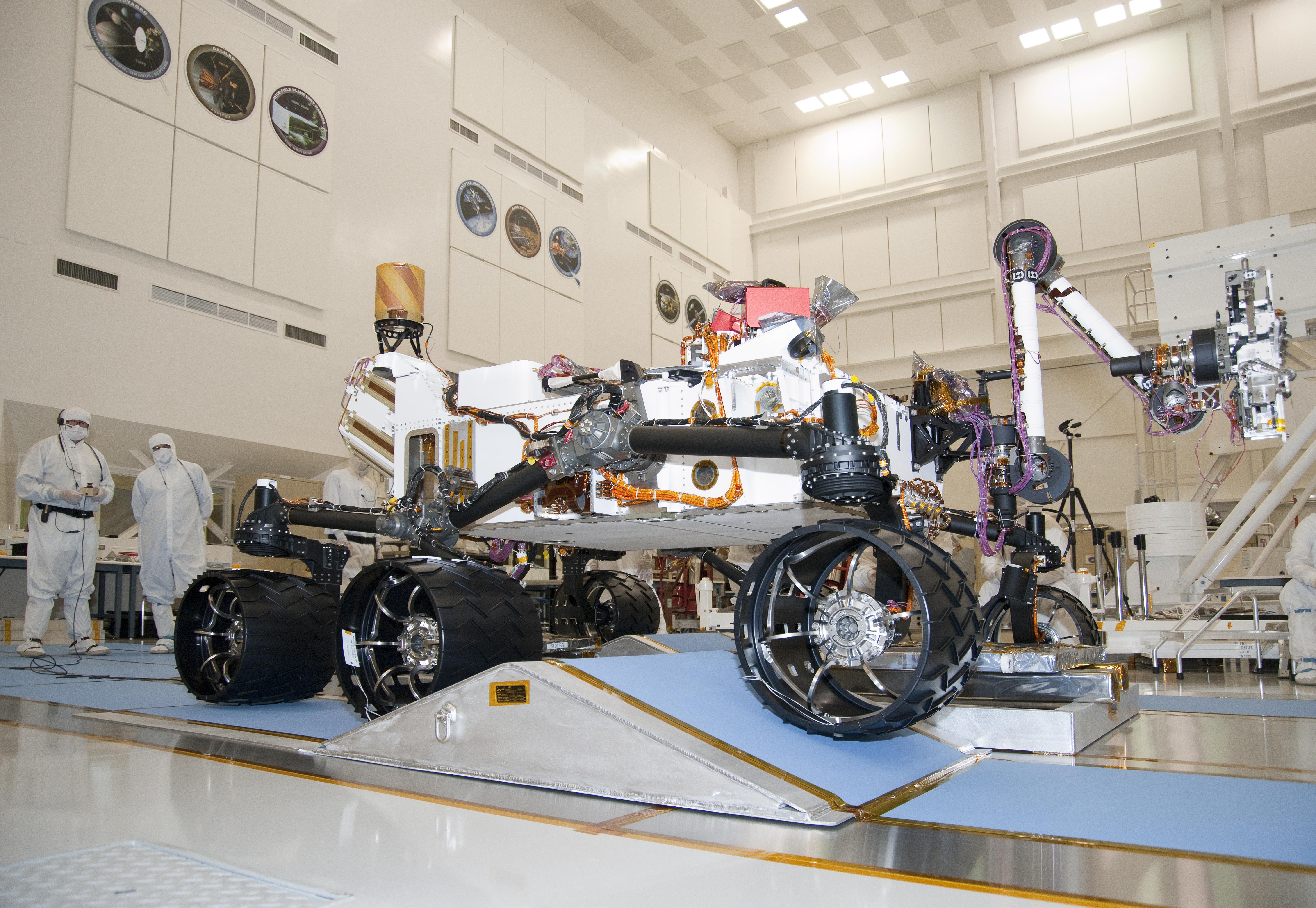
NASA’s latest Mars rover, Curiosity, passed an agility test by successfully navigating a set of ramps. Each wheel can maneuver independently, allowing for the flexibility needed to traverse the rocky Martian surface autonomously. Set for launch in late November 2011, the car sized mobile science machine will study Mars for two years or more.
Random thoughts, occasional rants, illuminating commentary, and an odd story now and then from the world of 9-1-1 dispatching. All this and more from a gay liberal atheist living in California’s Bible belt. I recently married, so MAGA beware! I’m your worst nightmare! Some names have been omitted to protect the innocent, but the guilty will be hung out to dry!


 From the looks of the images, you’d think “no big deal. A little tiny hole in a rock.” The truth, however, is much more sinister.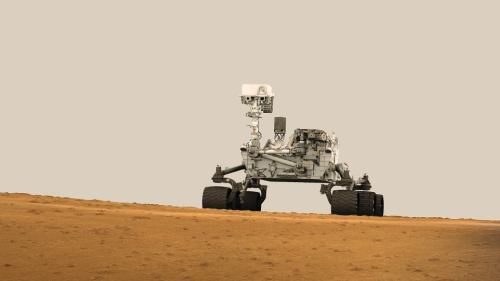



 JimmieJoe / KC6YRU
90 days? Ha! How about 15 years!
March 1, 2019
Jim Reeves commentary, geek JPL, Mars, NASA, Opportunity Rover Leave a comment
NASA and JPL have closed the books on the Mars Opportunity rover. Designed for a 90 day mission, the little explorer-that-could made it almost 15 years. The last transmission from the rover has been translated into something a bit anthropomorphic and pensive, and variations on the above image have become Internet memes. Someday someone will find it sitting forlornly in a pile of Martian dust, and at that point we’ll have to decide whether to bring it back to be displayed in the Smithsonian, or to create a permanent historical park on Mars.
Good job, Opportunity (you, too, Spirit and Sojourner). Rest easy, we’ll find you someday.
Share this: