
A moon of Saturn is trying to escape! (OK, not really. Here’s the real scoop)
Wit, Wisdom, and Whimsy. (your mileage may vary)
October 1, 2010
geek Enceladus, full afterburner, moon of Saturn, Saturn, space geek Leave a comment
A moon of Saturn is trying to escape! (OK, not really. Here’s the real scoop)
September 28, 2010
geek, Humor, video communicator, Star Trek Geek, Trekker, Trekkie Leave a comment
It might all be a joke to you, but then again, it might not be!
September 28, 2010
geek, Pictures last flight of the space shuttle, NASA, shuttle fuel tank, STS-134 Leave a comment

The last Space Shuttle External Tank heads for the VAB. This tank will be used for STS-134, the last flight of the shuttle program. After STS-134, NASA will not have a manned spacecraft for years. Until then, we hitch a ride with the Russians.
September 22, 2010
geek geek, international space station, last flight of the Discovery, NASA, Shuttle Discovery Leave a comment
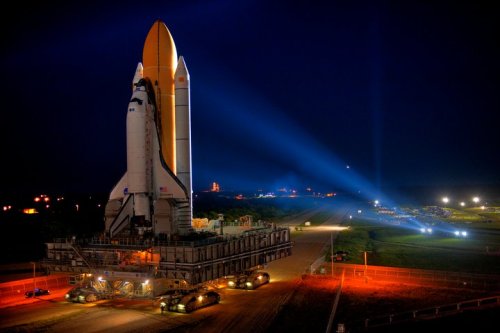
Picture by Larry Tanner KSC
Discovery’s final roll out. November’s launch to the International Space Station will be the last flight for this historic vehicle. The third orbiter in the Shuttle fleet, Discovery’s first launch was on August 30, 1984. In April 1990, it launched the Hubble Space Telescope from it’s cargo bay. In it’s career, Discovery has flown over 30 missions. For more information, check out NASA’s Discovery pages, here and here.
September 13, 2010
geek Curiosity, JPL, Mars, Mars rover, NASA, NASA Geek, Rover Leave a comment
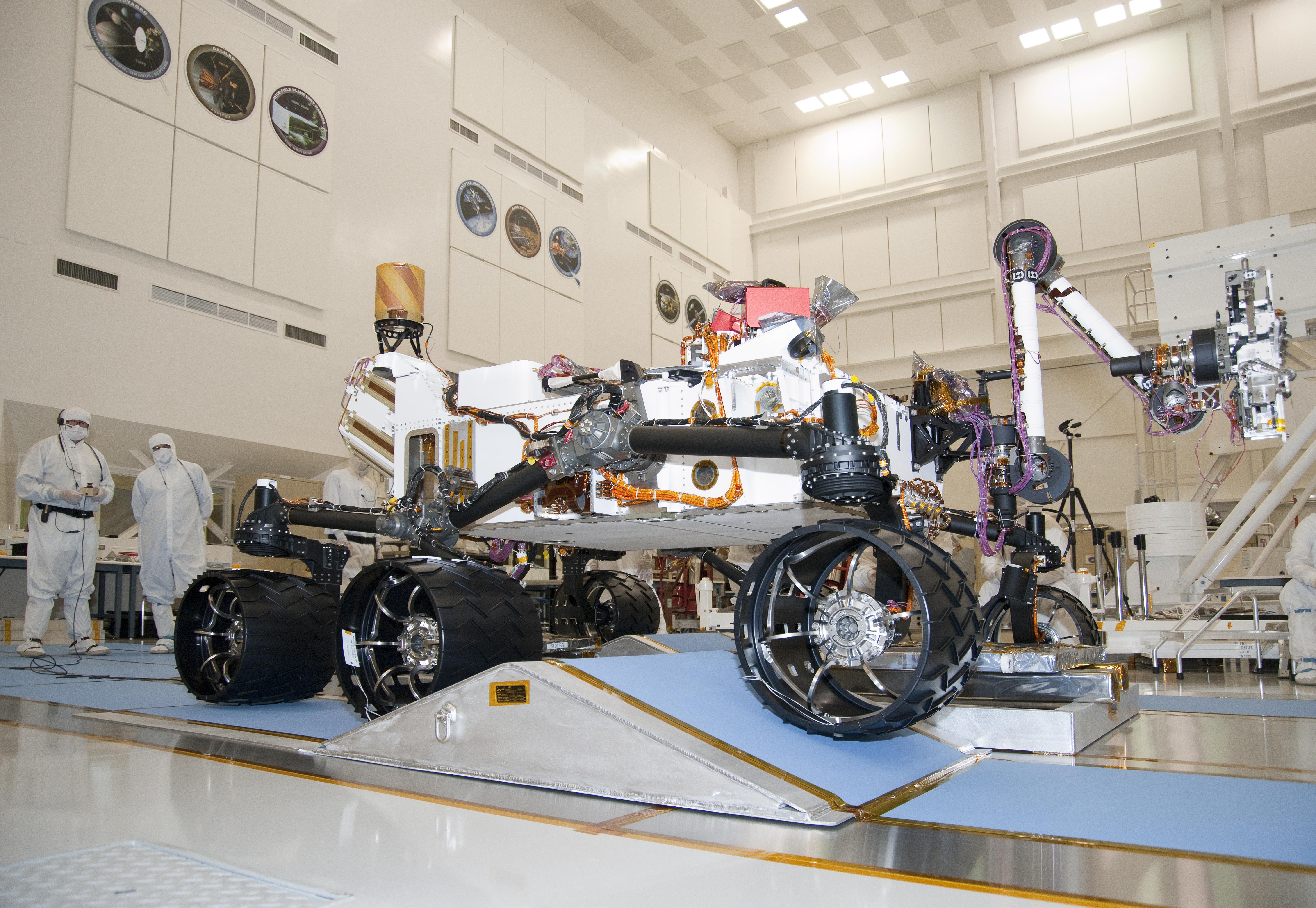 NASA’s latest Mars rover, Curiosity, passed an agility test by successfully navigating a set of ramps. Each wheel can maneuver independently, allowing for the flexibility needed to traverse the rocky Martian surface autonomously. Set for launch in late November 2011, the car sized mobile science machine will study Mars for two years or more.
For NASA’s latest article, check out this JPL site.
More pics after the jump.
September 12, 2010
geek ISS, Progress, Russian spacecraft, Space Station, unmanned docking Leave a comment
 The latest Russian unmanned Progress supply ship docked with the International Space Station this morning, as the orbiting complex flew above central Asia. The unmanned cargo vessel flew itself up to the Space Station, did a fly around to align itself for docking, then docked. That’s like a delivery truck, minus a driver, coming to your house from another state, pulling up to your garage, opening the door, pulling in and closing the door behind itself. All the while never breaking any traffic laws, causing any accidents, or scraping the paint on the garage walls.
Now the crew aboard the station will unload the supplies, fill it with trash, and in December sometime cut it loose to burn up in the Earth’s atmosphere.
We may have beat them to the Moon, and designed the most complex space vehicle ever, but the Russians have perfected the art of unmanned docking and assembly line spacecraft production. With the impending retirement of the Space Shuttles, we will rely on Russia for many years to come for access to space for our astronauts. We’ll be “spaceship-pooling” with them, and picking up the tab.
September 11, 2010
geek, Personal, Pictures Amateur Television, Amatuer Radio, ATV, Ham radio, live TV Leave a comment

One of my hobbies is HAM radio. On some of the frequencies, we can do live television. Here’s a picture of something on my TV right now. The Ham who owns the repeater has his ID running now, earlier another operator had some live video broadcasting from his “shack”. Here are some links that can show you more.
September 10, 2010
geek, Personal, Pictures historical Visalia, Main and Court, then and now, visalia Leave a comment

Main and Court, Visalia from about 1863. Perhaps the earliest photograph of Visalia. Looking east from just west of the intersection.

The same intersection today. Would any Visalians of the first picture recognize their town?
September 8, 2010
commentary, geek 2010 RX30, asteroid near miss, remote telescope, space 1 Comment

On Wednesday, September 8, 2010, asteroid 2010 RX30 sailed past Earth at a mere 154,600 miles away. That’s just over half the distance to the Moon!
The images above were taken at the Mayhill, New Mexico Observatory’s 0.25 meter telescope at 12:45 am by Italian amateur astronomers using the Global Remote Astronomy Telescope Network. Details at Wired Astronomy.
Whoosh! I thought I felt something brush past me this morning!
(well, drat. The image is supposed to be an animated gif, but for some reason it’s not animating! Go to the Wired Astronomy page to see the asteroid actually moving across the image)
UPDATE: 9/09/2010 1330 hrs PT
A couple of people have asked about the size of the asteroid, so after a bit of Google work, the results are in. 2010 RX30 is 10 to 20 meters across (32 to 65 feet). In comparison, the rock that hit Arizona 50,000 years ago was about 45 meters (150 feet) across.
2010 RF12, an asteroid 6-14 meters (19 to 45 feet) across slipped past us later the same day (5:12 pm EDT) at a mere 49,000 miles. The Goa’uld may be practicing!

 JimmieJoe / KC6YRU
Shuttle Geek – Discovery Rolls Out For Final Mission
September 9, 2010
Jim Reeves commentary, geek Discovery, international space station, NASA, Space Shuttle, sts 133 1 Comment
Share this: