A charter city is a municipality where the governing system is defined by its own unique legal document—a city charter—rather than solely by general state, provincial, or national laws. Visalia’s charter was created in 1923, and updated in 1974. We’re due for some critical thinking on the charter, and some updates to reflect today’s world. Much of the charter still works, but much of it also needs amending. I uploaded the Charter to Grok, and asked it to analyze the current document, and suggest things to bring it into the 21st century. Here’s what it came up with. (The current Charter can be found at the end of this blog.)
Analysis of the City of Visalia Charter
The provided Charter of the City of Visalia, adopted in the early 20th century and last amended in 1974 (with Section 21 deleted), establishes a council-manager form of government with broad home rule powers over municipal affairs, as permitted under Article XI of the California Constitution. It is a concise document (around 25 articles) that emphasizes local control, fiscal conservatism, and procedural safeguards, reflecting the era’s priorities like post-Depression financial limits and mid-century urban planning. The charter aligns with California’s framework for charter cities, granting supremacy over “municipal affairs” (e.g., elections, officer compensation, zoning) while subordinating to state law on “statewide concerns” (e.g., housing mandates, labor relations under certain statutes).
Key strengths:
Home Rule Emphasis: It robustly asserts powers over utilities, zoning, franchises, and emergencies, consistent with charter city autonomy.
Fiscal Prudence: Strict limits on taxes (1% property tax cap, specials for libraries/parks), debt (20% of assessed value), and bidding (aligned with state thresholds) promote accountability.
Governance Structure: Council-manager system with appointed officials (e.g., City Manager handles operations) supports professional management.
Public Safeguards: Provisions for initiative/referendum/recall, open meetings, and audits enhance transparency.
Key weaknesses/outdated elements:
Language and Inclusivity: Gendered pronouns (“he,” “his”) assume male officeholders, excluding modern norms of gender neutrality.
Lack of Modern Priorities: No explicit focus on equity, sustainability, technology, or post-2020 innovations like remote governance.
Potential Conflicts with State Law: Some sections (e.g., zoning, elections) predate major reforms like Proposition 13 (1978), SB 9 (2021 on lot splits/duplexes), or redistricting laws (e.g., AB 764, 2024). Courts have increasingly classified housing as a statewide concern, limiting charter city exemptions.
Rigidity: Fixed processes (e.g., 2-hour notice for special meetings) hinder agility; no provisions for term limits, ethics commissions, or diverse representation.
Omissions: Lacks sections on climate resilience, data privacy, or economic development tools common in updated charters.
Overall, the charter functions but feels archaic compared to peers like San Francisco (reformed 1996, ongoing updates) or Oakland (1998 shift to mayor-council). Modern best practices, per the League of California Cities’ Charter City Toolkit and the National Civic League’s Model City Charter (9th Edition, 2021), emphasize flexibility, equity, and performance metrics. California’s 121 charter cities (out of 482 total) often use charters for tailored governance; Visalia could enhance efficiency without losing core principles.
In 2002, to settle a discrimination lawsuit filed by a Golden West student, the ACLU, and the GSA Network, the Visalia Unified School district agreed to the following consent decree. The decree was valid until June 30, 2005, with an extension to June of 2007 if VUSD failed to complete the agreement. In it, the District agreed to the following:
Adopt policies explicitly forbidding staff or student harassment or discrimination based on gender or sexual orientation;
Name “”compliance coordinators”” to help parents, students and teachers with incidents of discrimination;
Establish a community advisory group to help address discrimination and assess how the settlement is working.
It also required the District to facilitate any student requests to form a LGBT-related school club, and make the efforts to find a teacher willing to be the club’s advisor. Materials regarding discrimination and LGBT rights, staff training, student training, and protection from retaliation were parts of the agreement.
Flash forward to 2026.
Redwood High School students, on Senior picture day, decided to arrange tshirts with letters and numbers on them to form the derogatory “2FAG60TS” seen above. Students posted the images to social media, and the community erupted. See previous posts on this blog for further information.
It may be time for VUSD to dig into their storage units and dust off the materials required by the decree. They clearly need some review.
The next VUSD Board of Trustees meeting is Tuesday, March 10, 2026. It will be held at the Board room, VUSD, 5000 W. Cypress, Visalia, California, at 5:30 pm. A large crowd is expected.
Here is the consent decree as agreed to between VUSD, the student George Loomis, the ACLU, and the Gay Straight Alliance Network.
I was perusing the Charter of the City of Visalia, as one does, and I ran across a bit of a mystery, and a conundrum. I think it’s time for an update. It was last modified in 1974, and some of the things in it need some changes. For starters, it needs to become gender neutral:
Article VIII City Manager Section 1. The City Manager need not be a resident of the State of California at the time of his appointment. His powers and duties shall be:
The City of Visalia has had a woman as city manager for some time, now. The Municipal Code does, at least, cover itself in this situation, with the following:
1.04.030 Grammatical interpretation. The following grammatical rules shall apply in the ordinances of the city unless it is apparent from the context that a different construction is intended: A. Gender. Each gender includes the masculine, feminine and neuter genders. B. Singular and Plural. The singular number includes the plural and the plural includes the singular. C. Tenses. Words used in the present tense include the past and the future tenses and vice versa, unless manifestly inapplicable. (Ord. 9605 § 2 (part), 1996: prior code § 111)
But that’s not what this blog is about. This is:
Article VI Legislative. The Council. Powers and Duties (5) Appoint a City Attorney, a City Manager, a City Clerk, and five Library Trustees.
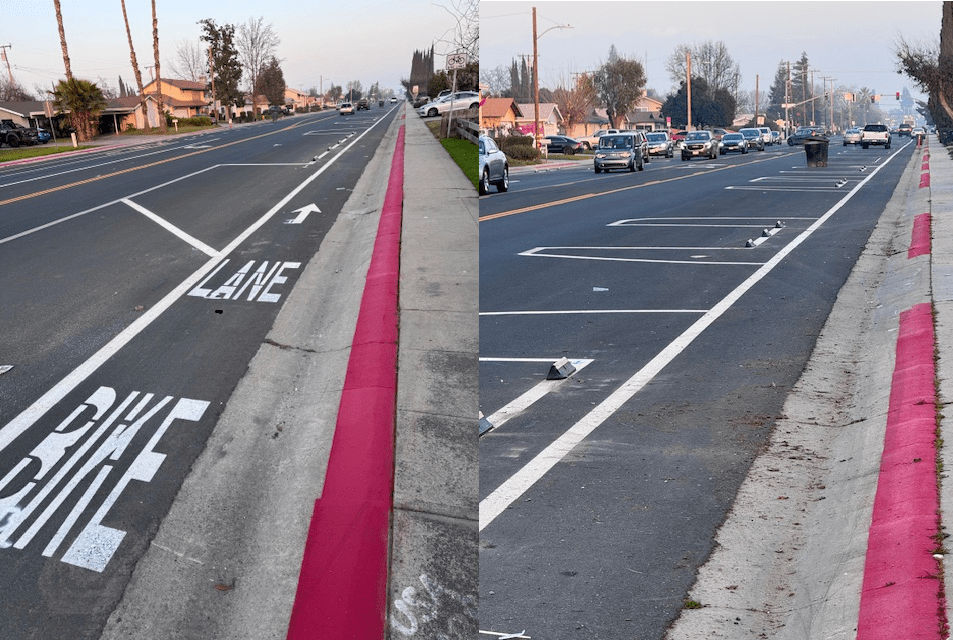
Change has come to Visalia. Specifically, on Tulare Avenue. From Demaree east to Cotta, new lane configurations have upset a lot of people.
I put a video up on Facebook and Instagram about these new lane configurations, and it’s garnered over 11 thousand views in just one day. (You can view the YouTube version, here.)
Change doesn’t come easily for some folks. My Facebook post has 55 comments so far in the 24 hours since I posted it. (That’s a lot for a post by me.) Most were not favorable towards the new layout.
Change doesn’t come easily for some folks. Here are some comments made, and my response to some of them.
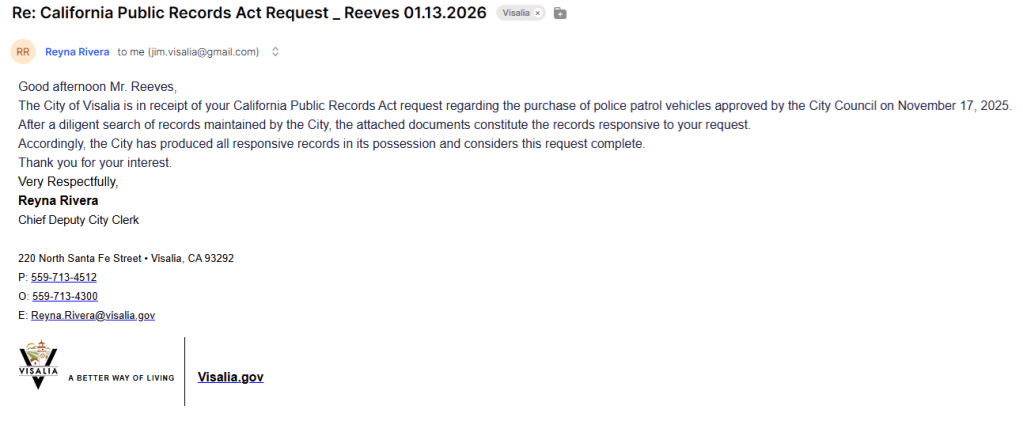
My request for information regarding the purchase and “upfit” of 14 new Dodge Durango Police SUVs landed in the Visalia City Clerk’s email Monday, 1/12/2026, and the response landed in my email Tuesday, 1/13/2026, shortly after 5pm. Talk about quick service!
If you’d like to follow me down this particular rabbit hole, click on ‘more’ below, and you’ll see the pages of information about the Durangos, and the “upfit” equipment to be installed in each.
If you don’t want to fall down that hole, then I’ll just say that it takes a lot of equipment to outfit a modern police vehicle, and while I think $33,000 each is making someone a lot of money, I doubt this is a case of “we can get it cheaper somewhere else”.
Thank you to the City Clerk for the rapid response to my request.
Perusing the Visalia City Council agenda can be tedious, at times. Monotonous, filled with, frankly, less than enlightening information. Generally, there’s not much to grab your attention, as it’s the nuts and bolts of running a city. I often refer to it as “the sausage making” of city government. Sometimes, though…
Last November, I noticed consent calendar entries for new police cars (SUVs, actually. Seems nobody is producing sedans for police work anymore). Included in the agenda packet information was an approval request for:
“Award a Contract for 14 New Police Patrol Vehicles – Request authorization to award a purchase contract for fourteen (14) fully marked Police patrol units with National Auto Fleet Group located in Watsonville, CA, in the amount of $1,281,193 for 2026 Dodge Durango’s, appropriate $14,130 from General Fund, $106,395 from Measure T, and $122,674 from the Replacement Fund for total appropriations of $243,200.”
Each Durango had a purchase price of $57,193.47, with an equipment “upfit” of $33,895.03 each.
Now, we can ponder about a $1.3 million purchase being included in a “consent calendar” item, relegating it to the shadows and holding no public discussion on the expense. (You should see some of the “consent calendar” items and the associated dollar amounts that float through the Tulare County Board of Supervisors meetings. Yikes. And some retro-active, at that! – but that’s maybe for a different discussion.)
I’m a bit torn between the idea of not bogging down meetings with endless procedure, and I also firmly believe in hiring good people, setting their parameters and goals, and then getting out of their way and let them do their jobs, but… that’s a lot of money for important city assets.
Here’s my public records request to the City of Visalia (sent late on a Friday, so no action until next week at the earliest):
To: City of Visalia City Clerk cityclerk@visalia.city 01/09/2026
Dear City Clerk,
This is a request under the California Public Records Act (Government Code § 6250 et seq.).
I request that the following records be made available for public inspection and/or that copies be provided:
On 11/17/2025, the Visalia City Council passed consent item #8, “Award a Contract for 14 New Police Patrol Vehicles”. The agenda packet includes quotes from National Auto Fleet Group for 14 new Dodge Durango Pursuit AWD vehicles, at $57,193.47 per vehicle. Also included in the quote are twelve “upfit” specifications, at $33,895.03 per vehicle. These vehicles are listed as available under Sourcewell Contract 091521-NAF.
I would like documentation on the “stock” equipment level of the vehicles being purchased. This would be satisfied by the information included in the “Monroney” sticker attached to new vehicles. I would also like a detailed listing of the equipment to be installed in the “upfit” of the vehicle prior to delivery to the City of Visalia.
If any portion of these records is deemed exempt from disclosure, I request that you redact only those portions and provide the remainder of the records, citing the specific legal justification for each redaction as required by the CPRA.
Please inform me in advance of any fees associated with compiling or copying these records. If the estimated costs exceed $20, please contact me for approval before proceeding.
As provided by the CPRA, I look forward to your response within 10 calendar days regarding the availability of these records.
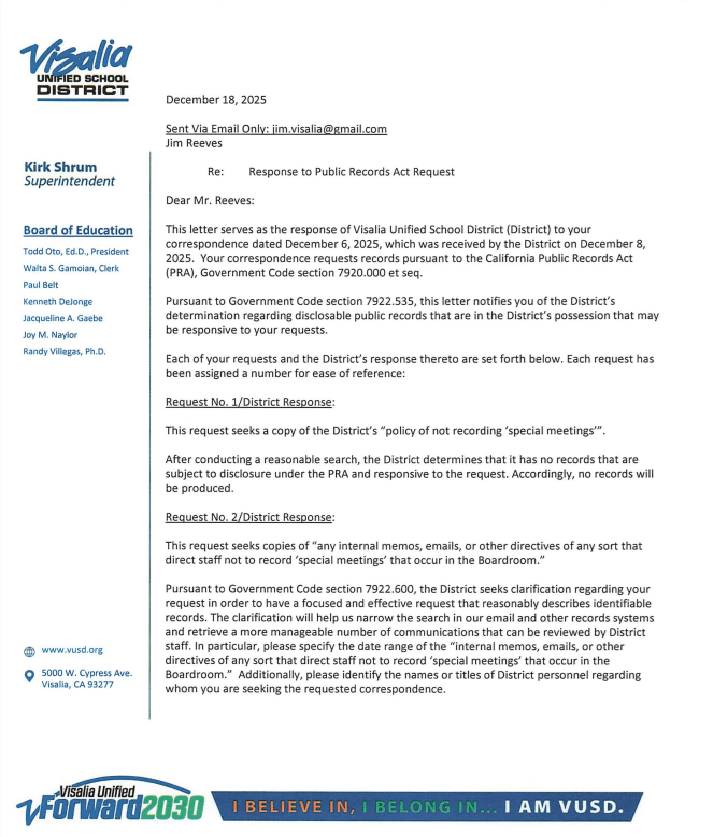
The Visalia Unified School District responded to my request for information. There were two parts to that response.
Part One:
So, if I’m reading this correctly, there is no policy that says ‘special meetings’ will not be video recorded. That seems odd. If it’s routine to record Board meetings when held in the Boardroom, why aren’t ‘special meetings’ video recorded? Does this mean some manager told staff to not record the meetings? On what basis was that order, if it happened, made? If no such order was made, is the staff member making the decisions themselves? I rather doubt that.
Part Two:
They want the name or title of the District personnel that I’m requestion information about in order to search email or other records. Unfortunately, the District does not list employee positions online. I am unable to determine who might be the person(s) whose records would be appropriate to check for information with an online search.
They also want a date range to search, but how do I determine what time frame would be appropriate, since they do not include all of the past agendas and minutes on their web pages.
I’m currently researching online documents from the District to see if I can figure out just why they don’t record ‘special meetings’, but if I can’t find anything I may have to start making phone calls.
Seems like a lot of work for such a simple request.
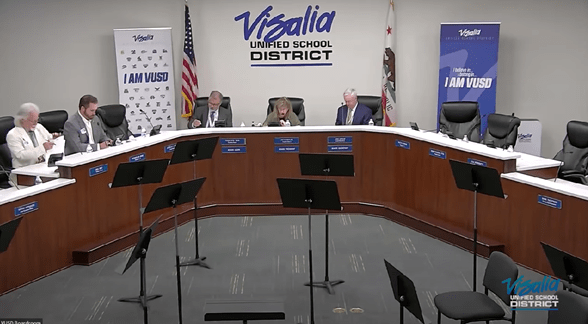
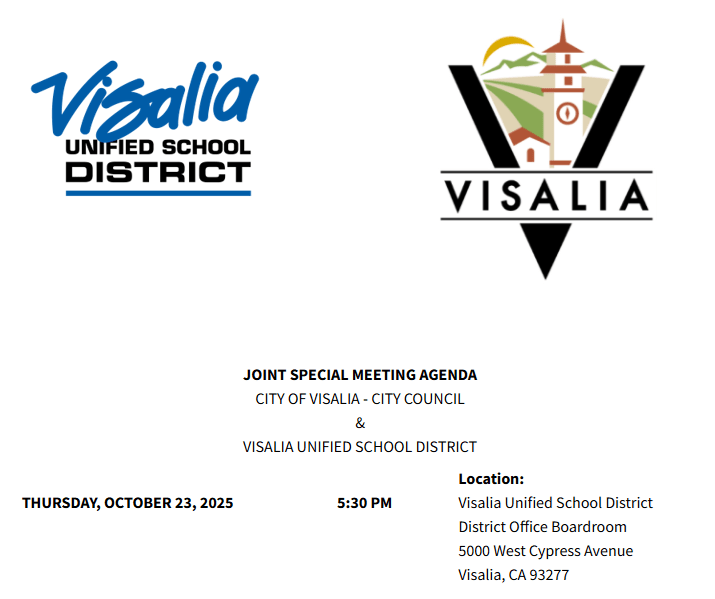
Paul Flores does a deep dive into the situation regarding Visalia Unified School District and the Visalia City Council’s unrecorded joint meeting on October 23, 2025.
The following is a part of the posted agenda for that meeting:
Members of the public may address the Board on any agenda item when the item comes to the Board for consideration. At regular meetings of the Board, members of the public may also address the Board regarding non-agenda items that are nonetheless within the Board’s jurisdiction during the general public comment portion of the agenda. Pursuant to Board Bylaw 9323, the Board will limit individual comments to no more than 3 minutes and individual topics to 20 minutes.
The District reserves the right to not hear comments, or portions of comments, that violate meeting guidelines.
I was the only member of the public to take advantage of the public comments section of the meeting. In it, I updated the School Board and the City Council on the recent Pride Visalia festival, held on October 11, 2025. During the remarks, I reminded and invited both the City Council members and the Board of Directors for the school district that The Source LGBT+ Center was available to consult with them on LGBTQ+ issues, and provide resources and information they might find useful in both their professional and personal lives.
The Visalia Unified School District takes video and audio recordings of the meetings, and posts them to a YouTube channel for the public to view. No post of this special meeting occurred.
I waited several days for the video to appear, as sometimes delays in posting can occur, sometimes the posters fault, sometimes YouTube’s. No recording of the meeting appeared.
I sent an email to the school district, asking if a recording was made, and when it would be available.
From: Jim Reeves jim.visalia@gmail.com Date: October 28, 2025 at 5:32:34 PM PDT To: cgutierrez04@vusd.org Subject: Board special meeting video
Hi, Does a video recording of the October 23, 2025 joint meeting between the School Board and the Visalia City Council exist? I’ve checked the YouTube channel, and found no video. I’ve noticed in the listing of meetings that special meetings don’t show a video. Is there a video available that I can get a copy of? Or an audio recording? Thank you for your attention to this matter.
Jim Reeves Jim.visalia@gmail.com Sent from my iPad
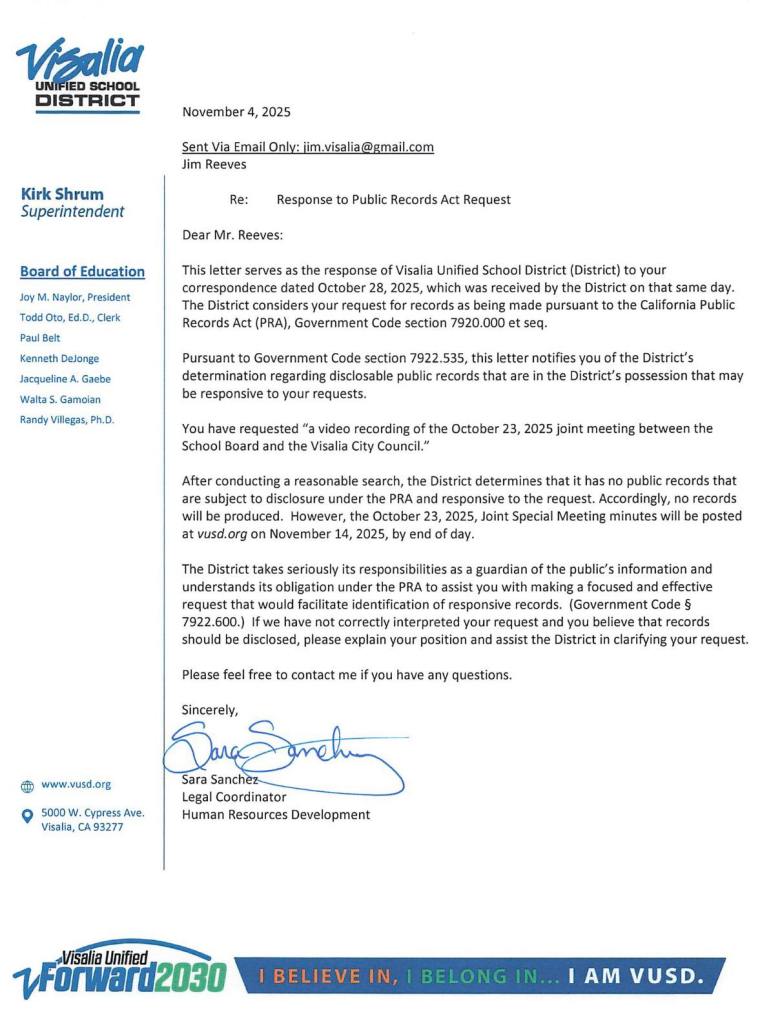
After several days, I received the following response:
“After conducting a reasonable search, the District determines that it has no public records that are subject to disclosure under the PRA and responsive to the request. Accordingly, no records will be produced.”
That’s a strange way to phrase it, at least to us non-lawyers.
I’ve followed up with the following email to the Board President, and the Board member for my area:
President Naylor, Boardmember DeJong,
I attended the Special Meeting of October 23, 2025. On October 28, I emailed a request for a copy of the video, or an audio recording, of the meeting since it had not been posted on YouTube. On November 4, I received the attached email, indicating “that it has no public records that are subject to disclosure under the PRA and responsive to the request”. I have noticed in the listing of prior meetings, that ‘Special Meetings’ often do not have a video recording. Is this a formal policy of the District? If so, can I be directed to that policy? It seems odd that no recording is made of the meeting, despite it being held in the Board room, and utilizing the audio/video equipment there. I would like to understand why the District does not record these meetings, and I hope you can clear this up for me. Mr. DeJong, I’m CCing you on this because I reside in your area.
Jim Reeves jim.visalia@gmail.com
Board President Naylor responded:
Jim, Thank you for your email regarding the recording of the special board session with the city. I have forwarded your email to the district office to look into this matter. Again, thank you for bringing this to our attention.
Joy
We’ll see what the next week brings, and if the District responds further.
My goal now is to find out if a recording was not made of the special meeting, why not? Is there a District policy prohibiting it? If so, I want to see that policy, and when and how it was implemented. If it’s just a “we just don’t do that”, I want to know the reasoning why, and under whose authority.
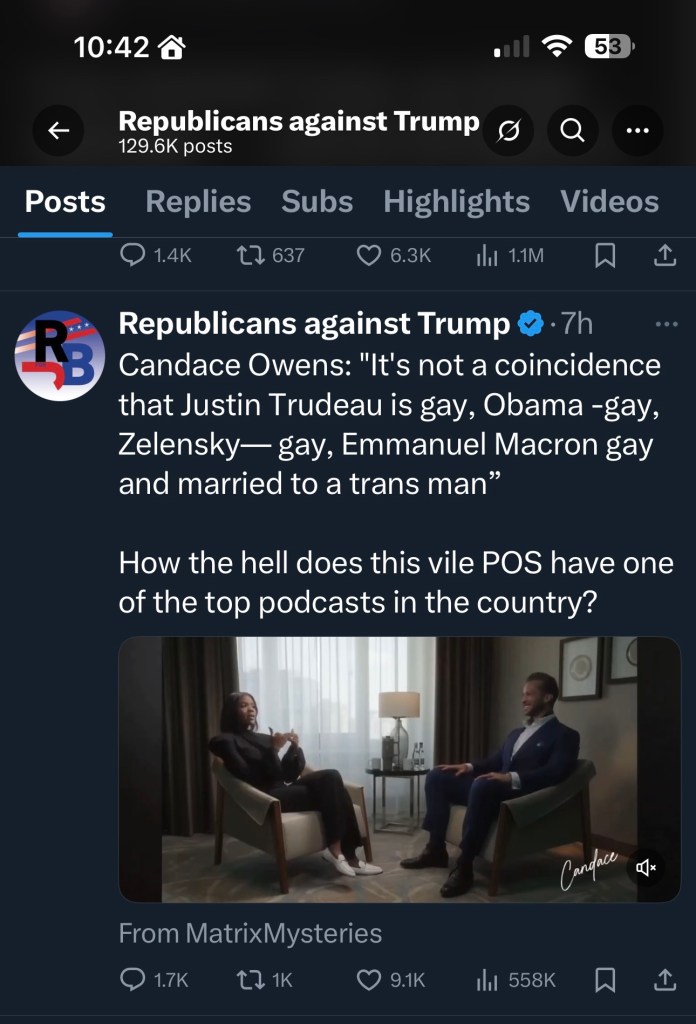
Recently, (11/1/2025), the Twitter (X) account “Republicans Against Trump” (@RpsAgainstTrump) posted this:
Screenshot
I responded with this:
Screenshot
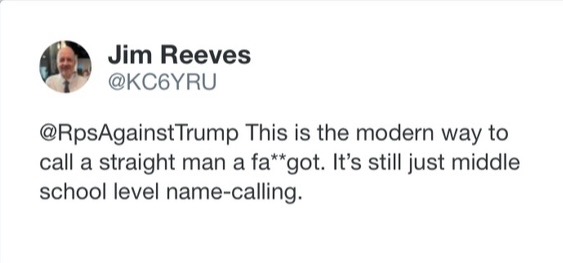
That resulted in the email shown above. I’ve been ‘shadow banned’ for making a comment about how Owen’s comments are simply more insults hurled at straight men, accusing them of being gay.
Twitter used to be an important and influential platform, back when it was actually Twitter. Elon Musk, after buying it and reworking it’s algorithms, has turned it into nothing more than a cesspool filled with misogynists, incels, racists, bigots, and other actual hate-mongers.
I maintain two Twitter (X) accounts. The original was my regular feed, with a wide range of accounts I followed, from science to LGBT to celebrities to local individuals I wanted to keep up with. A few years ago, I created a second account, where I followed many MAGA and other right-wing sites, Republican electeds, and other such nonsense. I, naively, thought I could keep the cesspool away from my regular feed, and only go on the second account when I wanted to see what they were saying.
Now, with Musk twisting the algorithm to its current insanity, my regular feed is frequently nothing but pushed right-wing crap that I don’t follow or interact with.
It may be time to close my Twitter (X) accounts altogether, and stick with Bluesky and Threads. They are quickly becoming what Twitter used to be.
Random thoughts, occasional rants, illuminating commentary, and an odd story now and then from the world of 9-1-1 dispatching. All this and more from a gay liberal atheist living in California’s Bible belt. I recently married, so MAGA beware! I’m your worst nightmare! Some names have been omitted to protect the innocent, but the guilty will be hung out to dry!





 JimmieJoe / KC6YRU
Visalia’s Charter: Time For A Refresh
March 9, 2026
Jim Reeves commentary, News Charter City, history, News, politics, visalia, Visalia Charter, Visalia Municipal Code Leave a comment
A charter city is a municipality where the governing system is defined by its own unique legal document—a city charter—rather than solely by general state, provincial, or national laws. Visalia’s charter was created in 1923, and updated in 1974. We’re due for some critical thinking on the charter, and some updates to reflect today’s world. Much of the charter still works, but much of it also needs amending. I uploaded the Charter to Grok, and asked it to analyze the current document, and suggest things to bring it into the 21st century. Here’s what it came up with. (The current Charter can be found at the end of this blog.)
Analysis of the City of Visalia Charter
The provided Charter of the City of Visalia, adopted in the early 20th century and last amended in 1974 (with Section 21 deleted), establishes a council-manager form of government with broad home rule powers over municipal affairs, as permitted under Article XI of the California Constitution. It is a concise document (around 25 articles) that emphasizes local control, fiscal conservatism, and procedural safeguards, reflecting the era’s priorities like post-Depression financial limits and mid-century urban planning. The charter aligns with California’s framework for charter cities, granting supremacy over “municipal affairs” (e.g., elections, officer compensation, zoning) while subordinating to state law on “statewide concerns” (e.g., housing mandates, labor relations under certain statutes).
Key strengths:
Key weaknesses/outdated elements:
Overall, the charter functions but feels archaic compared to peers like San Francisco (reformed 1996, ongoing updates) or Oakland (1998 shift to mayor-council). Modern best practices, per the League of California Cities’ Charter City Toolkit and the National Civic League’s Model City Charter (9th Edition, 2021), emphasize flexibility, equity, and performance metrics. California’s 121 charter cities (out of 482 total) often use charters for tailored governance; Visalia could enhance efficiency without losing core principles.
MoreShare this: