Mars is more than a red dot in the night sky. It’s a real place. We can go there.
Wit, Wisdom, and Whimsy. (your mileage may vary)
August 10, 2011
geek, News, Pictures Endeavour Crater, Mars, Opportunity Rover Leave a comment
Mars is more than a red dot in the night sky. It’s a real place. We can go there.
December 16, 2010
commentary, geek, News Mars, Mars rovers, NASA Geek, Opportunity, Santa Maria crater Leave a comment

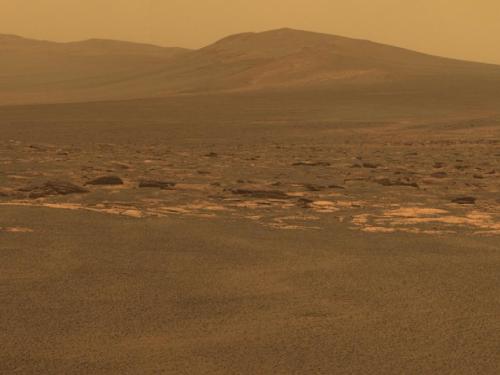
Designed to last 90 sols (Martian days of about 24 hours and 37 minutes), Mars Rover Opportunity took this picture at Santa Maria Crater yesterday, December 15, 2010, on Sol 2450. Santa Maria, visible in the background, is about 100 yards across. Opportunity will explore the crater for a few weeks, and then continue it’s cross country trek to Endurance Crater. Photo Credit: NASA
September 13, 2010
geek Curiosity, JPL, Mars, Mars rover, NASA, NASA Geek, Rover Leave a comment
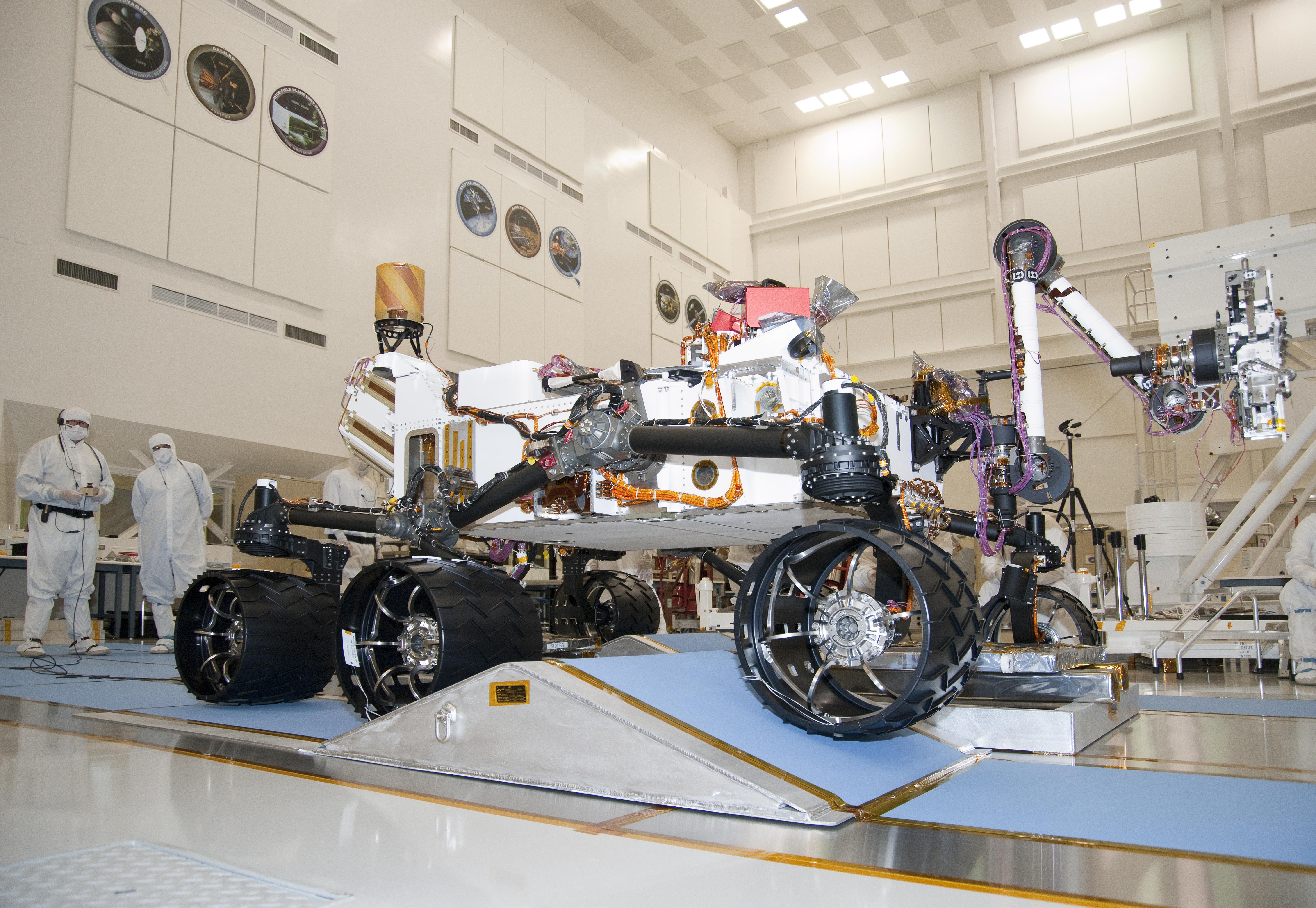 NASA’s latest Mars rover, Curiosity, passed an agility test by successfully navigating a set of ramps. Each wheel can maneuver independently, allowing for the flexibility needed to traverse the rocky Martian surface autonomously. Set for launch in late November 2011, the car sized mobile science machine will study Mars for two years or more.
For NASA’s latest article, check out this JPL site.
More pics after the jump.
August 1, 2010
Personal big as the full moon, closest approach, email spam, Mars, Neil deGrasse Tyson 1 Comment
 Did you get the Mars email? The one going on about how Mars would be closer to the Earth than at any time in the past 60,000 years? And how it would be as big as the full Moon? Don’t worry, if you haven’t you probably will before much longer. Here’s the scoop on the facts of the matter, from a real authority, Neil deGrasse Tyson.
From:The Haden Planetarium
by Neil deGrasse Tyson, 1 August 2010
Nearly everyone I know has received an e-mail about Mars from an anonymous source, but sent to them by friends who could not resist forwarding the message to their entire address book. The e-mail declares that toward the end of August, the planet Mars will be closer to Earth than it has in the past 60,000 years, thereby offering spectacular views of the Red Planet. The commentary proclaims, with liberal use of exclamation marks, that Mars will appear as bright as (or as large as) the full Moon in the night sky.
May 14, 2010
commentary, News, Personal Atlantis, flying car, Mars, moon base, NASA, Space Shuttle Leave a comment

Space Shuttle Atlantis Photo Credit NASA
As of this writing, the Space Shuttle Atlantis sits on the pad at Kennedy Space Center Florida, ready for today’s liftoff on a mission to the International Space Station. Barring any last-minute reprieves, this will be Atlantis’ last flight. After this mission, Orbiter OV-104, first flown in 1985, will be removed from service as NASA retires the Shuttle fleet. There are only a few more flights remaining in the construction of the International Space Station, and once those flights are done, the shuttle program will be ended. The orbiters will be safed, and shipped off to various museums and institutions for display.
Once the last Space Shuttle lands sometime in 2011, the United States will have no manned access to space. While there is an impressive list of rockets in NASA’s fleet, once the Shuttles are retired, American astronauts will only be able to go into space on the rockets of other nations, primarily Russia.
Essentially, the only way for the United States to access it’s Space Station is to hail a cab.

 JimmieJoe / KC6YRU
Mars Geek: Spirit Gives Up The Ghost
May 25, 2011
Jim Reeves commentary, geek, News Curiosity, Mars, NASA, Opportunity, Spirit rover Leave a comment
Transmissions to the Martian surface from Earth, and from orbiting relay stations have failed to elicit a response. Age and the terribly cold Martian winter have finally silenced the science lab on wheels.
The next generation rover, Curiosity, is nearing it’s launch date, and NASA must reconfigure Earth bound transmission arrays, as well as the satellites orbiting Mars, to support the new mission. Spirit will stand silent sentinel near Gusev crater now, slowly collecting a layer of Mars dust, waiting for the day when humans arrive to reclaim the sturdy little machine designed to operate for 90 days. Landing January 5, 2004, Spirit studied Mars for 6 years. Perhaps, someday, we’ll collect up Spirit, and return it home. An honored spot at the Smithsonian would be appropriate, I think. It’s certainly earned that distinction.
It’s twin, Opportunity, still roves on the other side of the planet, sending science back to eager researchers on Earth.
Share this: